• Categories
    • Overview
    • Biographies & Memoirs
    • Business & Economics
    • Children’s Books
    • Education
    • Fine Art
    • Fine Art Photography
    • Cookbooks
    • History
    • Literature & Fiction
    • Photography
    • Poetry
    • Religion & Spirituality
    • Sports & Adventure
    • Travel
    • Wedding
    • All Categories
  • Staff Picks
    • Overview
  • Best Sellers
    • Overview
  • Just Published
    • Overview
  • Publish Your Book
    • Overview
    • Photo Books
    • Trade Books
    • Magazines
    • Notebooks
    • Ebooks
  • Sign Up
  • Log In
    • United States
    • Australia
    • Portugal
    • Netherlands
    • Italy
    • United Kingdom
    • France
    • Germany
    • Spain
    • Canada (English)
    • Canada (French)
  • Home
  • Sign Up
  • Log In
    • Biographies & Memoirs
    • Business & Economics
    • Children’s Books
    • Education
    • Fine Art
    • Fine Art Photography
    • Cookbooks
    • History
    • Literature & Fiction
    • Photography
    • Poetry
    • Religion & Spirituality
    • Sports & Adventure
    • Travel
    • Wedding
    All Categories
  • Photo Books
  • Trade Books
  • Magazines
  • Notebooks
  • Ebooks
  • © 2016 - 2026 RPI Print, Inc.
  • Company
  • Work at Blurb
  • Pricing
  • Privacy Policy
  • Cookie Policy
  • Support
  • Sitemap
  • United States
  • Australia
  • Portugal
  • Netherlands
  • Italy
  • United Kingdom
  • France
  • Germany
  • Spain
  • Canada (English)
  • Canada (French)
    View UnSimilar by Brian FinnPreview
    Bookdetails_assets_facebook_icon Bookdetails_assets_twitter_icon Bookdetails_assets_pinterest_icon Bookdetails_assets_link_icon
    Share a Link
    copy
    Preview

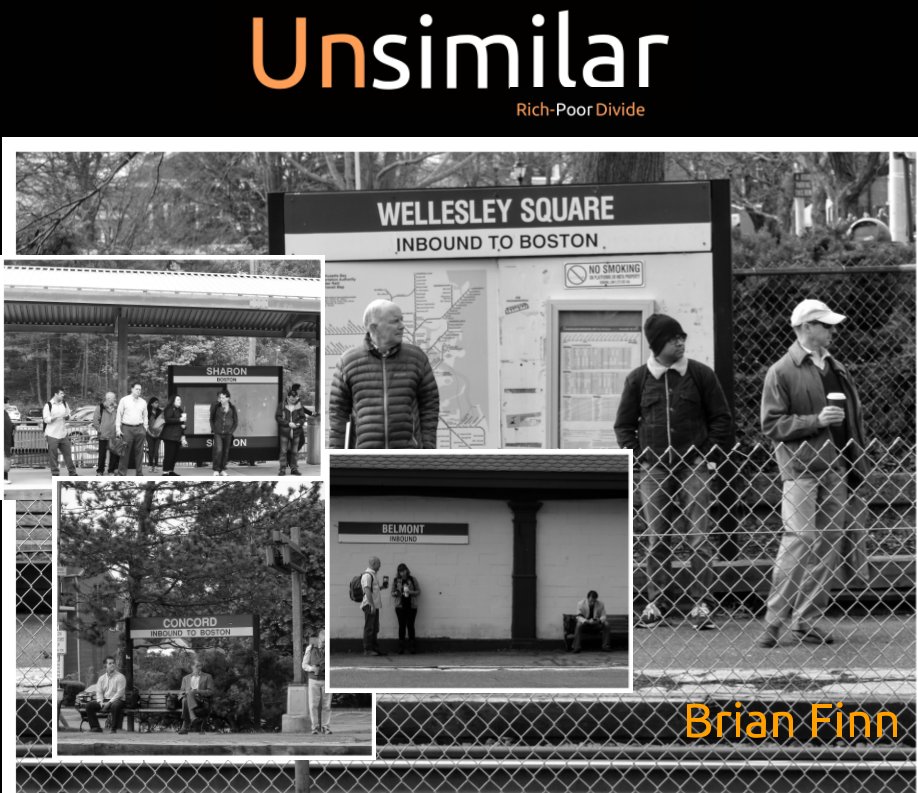
    UnSimilar

    Rich-Poor Divide

    by Brian Finn

    This is the price your customers see. Edit price list

    This book is available to buy on Amazon
    Go to Amazon
    About the Book

    Edit

    “Sorting Effect” is the primary reason why innovation leads to income segregation.

    How does the sorting effect work? Because the knowledge economy is driven by the exchange of ideas, innovative companies tend to cluster together. Subsequently, to reduce commuting costs, highly educated, highly paid individuals working at those companies choose to live nearby. That causes low-income and high-income workers to separate into completely different regions of the city. A high concentration of high-income workers also leads to a demand for more expensive amenities, such as Whole Foods, yoga studios, and coffee shops. The gentrification amplifies property value increases and further pushes low-income individuals out.
    Features & Details

    Edit

    • Primary Category: Education
    • Project Option: Large Format Landscape, 13×11 in, 33×28 cm
      # of Pages: 20
    • Isbn
      • Hardcover, ImageWrap: 9781388239800
    • Publish Date: Jul 07, 2018
    • Language English
    • Keywords demographics, household income, educational attainment, poverty, crime index, race
    See More
    About the Creator
    bfinn18
    Brian Finn
    Boston
    Continue reading
    • © 2016 - 2026 RPI Print, Inc.
    • Company
    • Work at Blurb
    • Pricing
    • Privacy Policy
    • Cookie Policy
    • Support
    • Sitemap
    Suas2020crop

    Good Things on
    the Way


    Watch your email for news and exclusive offers.

    Before you go

    Sign up to get 30% off
    your first book.


    Please enter a valid email address

    Get access to exclusive email offers when you join Blurb's creative community.

    By continuing you agree to the Terms & Conditions and the Privacy Policy.