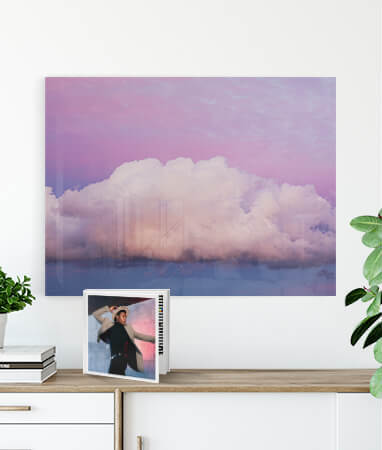
About the Book
This second volume extends the trajectory initiated in the first book, pursuing an exploration of the female figure as both presence and trace. The women I photograph remain at the heart of the work, not as figures to be described, but as sensitive surfaces where time, emotion, and vulnerability quietly leave their imprint. My approach remains intuitive, shaped less by narrative intention than by a continuous search for balance between form, matter, and sensation.
Over the years, my practice has increasingly embraced the materiality of photographic processes. I deliberately work with alternative and historical techniques, including wet plate collodion, dry plate, cyanotype, salted paper, gum bichromate, and orotone, often combining them with digital negatives and hybrid camera systems. These processes, with their inherent unpredictability, impose slowness and an acceptance of chance, allowing the image to emerge rather than be controlled.
Each technique carries its own constraints and expressive potential. Whether working with glass, metal, or paper, the final object is never merely an image, but a physical artifact shaped by chemistry, light and hand. The use of paper negatives, dry plates, and hybrid workflows reflects a desire to bridge past and present, tradition and experimentation, without privileging one over the other.
This volume is conceived as a continuation. The photographs gathered here reflect an ongoing dialogue with impermanence, intimacy, and transformation. By allowing images to exist as singular objects, sometimes fragile, sometimes imperfect, I seek to preserve not only what is seen, but also what is felt in the moment of creation.
Over the years, my practice has increasingly embraced the materiality of photographic processes. I deliberately work with alternative and historical techniques, including wet plate collodion, dry plate, cyanotype, salted paper, gum bichromate, and orotone, often combining them with digital negatives and hybrid camera systems. These processes, with their inherent unpredictability, impose slowness and an acceptance of chance, allowing the image to emerge rather than be controlled.
Each technique carries its own constraints and expressive potential. Whether working with glass, metal, or paper, the final object is never merely an image, but a physical artifact shaped by chemistry, light and hand. The use of paper negatives, dry plates, and hybrid workflows reflects a desire to bridge past and present, tradition and experimentation, without privileging one over the other.
This volume is conceived as a continuation. The photographs gathered here reflect an ongoing dialogue with impermanence, intimacy, and transformation. By allowing images to exist as singular objects, sometimes fragile, sometimes imperfect, I seek to preserve not only what is seen, but also what is felt in the moment of creation.
Features & Details
- Primary Category: Arts & Photography Books
- Additional Categories Fine Art Photography
-
Project Option: Standard Portrait, 7.75×9.75 in, 20×25 cm
# of Pages: 66 - Publish Date: Jan 03, 2026
- Language English
See More
About the Creator

Patrick Van den Branden
Bruxelles